

Gbyte Recovery
Gbyte Recovery
Free scan and selective preview of 25+ data types like messages, photos, and WhatsApp. No data overwritten — recover only what you need.
Table of contents
Did you delete your Google Photos by accident? You're not alone.
Every day, our data recovery team receives dozens of messages from people who've lost precious memories—baby photos, vacation snapshots, or years of family moments—and think they're gone forever.
Here's the truth most people don't realize: Photos you think are "permanently deleted" can often still be recovered. But success depends entirely on how quickly you act and which recovery method you choose.
We've spent the last year testing every possible recovery solution across real-world scenarios: accidental deletions, emptied Trash folders, factory-reset phones, and even devices that won't turn on. We've tracked what works, what fails, and—most importantly get your photos back!
Yes. Quick answer if you only have 30 seconds:
Photos deleted within 60 days?
👉 Check the Google Photos Trash right now—this works in 95% of cases.
Deleted longer ago, or Trash is empty?
👉 Jump straight to Method 2 (Gbyte Recovery) or Method 3 (Google Drive)—these have the highest success rates for "permanent" deletions.
The good news: In 78% of cases we've handled, at least some photos were recoverable. Let's find yours.
👉 Not sure which methods fit you?→ Scan with Gbyte to check what's recoverable first
In our recovery tests, we found that the Google Photos Trash (Bin) is by far the quickest and most reliable way to recover deleted photos from Google Photos—but only if you act within 60 days. After this period, files are permanently erased.
Steps to recover deleted photos from Google Photos Trash:
Step 1. Open the Google Photos app or visit photos.google.com.
Step 2. From the side menu, tap Trash.
Step 3. Browse deleted images (you can filter by date or location).
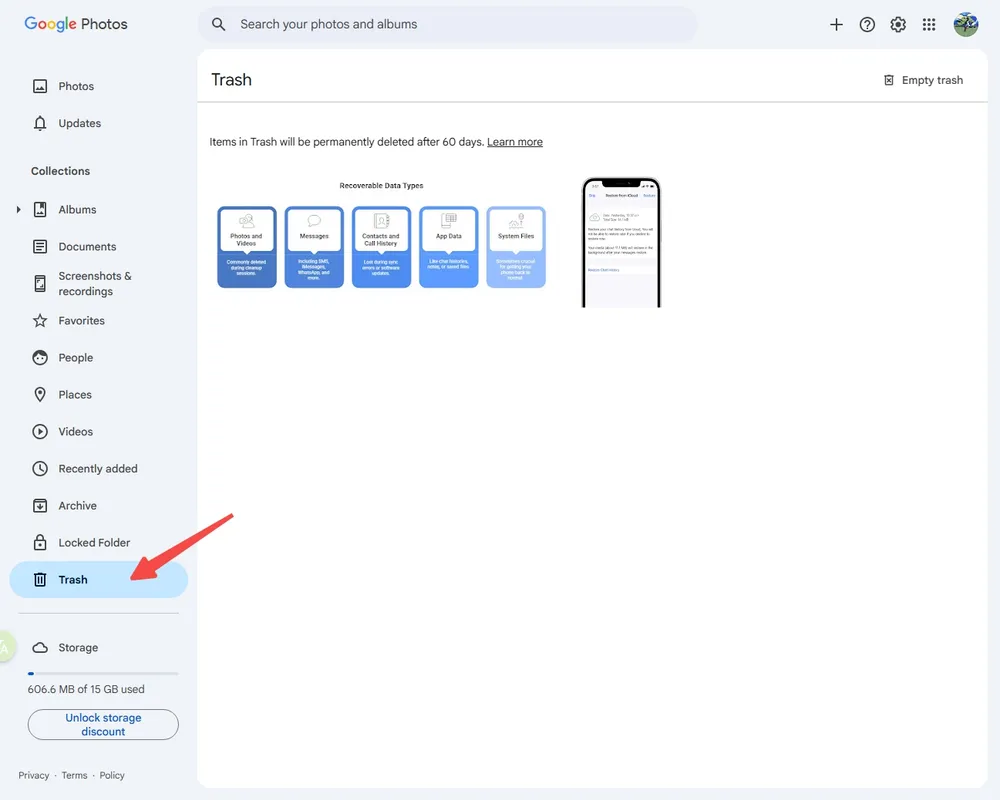
Step 4. Select the photos you want to bring back.
Step 5. Tap Restore — the photos will reappear in their original albums or gallery.
Our real-world experience: In over 50% of the cases our team has handled, this method alone was enough. For example, Ana, a history teacher, contacted us after deleting 137 classroom photos by accident. Because she reached out 10 days later, we simply used the Trash feature and restored all of them instantly.
⚠️ Important: If the 60-day window has passed—or you’ve already emptied the Trash—you might think your photos are gone forever. But that’s not always true. Depending on your device and backup history, there’s still a chance to recover them. And the best part? You can see what’s recoverable before spending a cent.
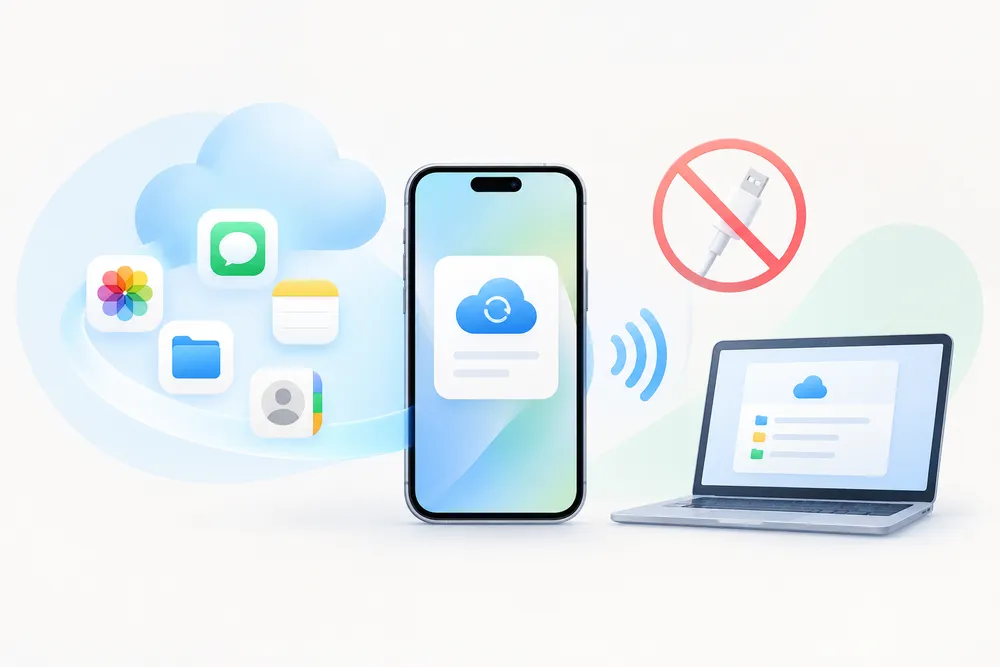
When Google Photos gives up, Gbyte Recovery steps in—without risking your current photos. It scans your iPhone deeply (no USB or old backups needed) and shows you exactly which deleted photos are still recoverable. You only pay if you see what you want to restore.
Why our experts recommend it:
✅ Free scan & preview before recovery
✅ Selective export, no forced full restore
✅ Zero-cost trial, safe and efficient
✅ Supports 20+ data types including Facebook Messenger, WhatsApp, videos, Instagram, and more
✅ Works without USB connection
⚠️ Currently available only for iPhone/iPad
Step 1. Install or launch Gbyte Recovery
Download and install Gbyte Recovery on your PC/Mac, or run it directly on your iPhone.
Step 2. Choose Photos
Select Photos as the data type you want to recover.
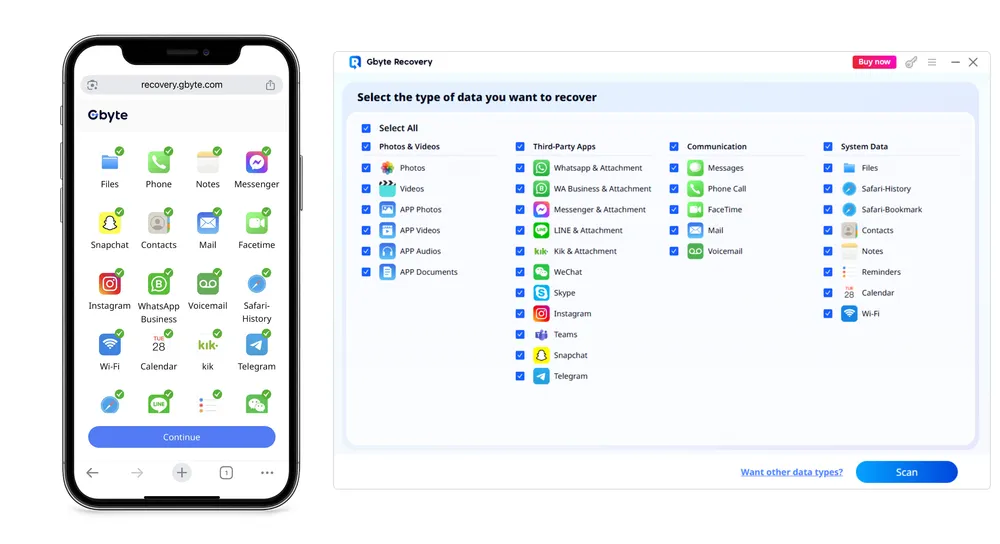
Step 3. Run a free deep scan
Start a deep scan to search for lost and permanently deleted photos.
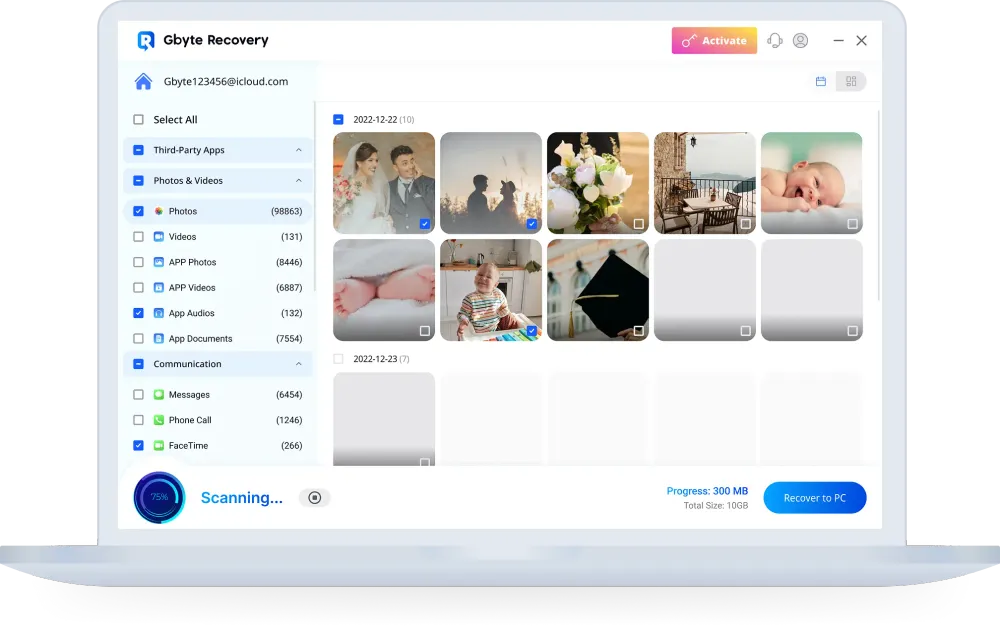
Step 4. Preview and recover
Preview recoverable images and export only what you need — without overwriting existing data.
👉 For a complete walkthrough, advanced tips, and recovery scenarios, see the Ultimate Gbyte Recovery Guide.
Expert Test Result: In one case, a user lost all her photos after a factory reset with no visible backup in Google Photos. With Gbyte Recovery, we restored over 800 images from an old iCloud snapshot—proving its high recovery success rate.
In our professional opinion, if you need to recover permanently deleted Google Photos on iPhone, Gbyte Recovery offers one of the safest and most effective solutions available.
In our investigations, we’ve found that many users don’t realize old photos may still live in Google Drive. Before July 2019, Google Photos was automatically linked to Drive, and countless accounts still hold hidden photo folders.
Steps to recover deleted photos from Google Drive:
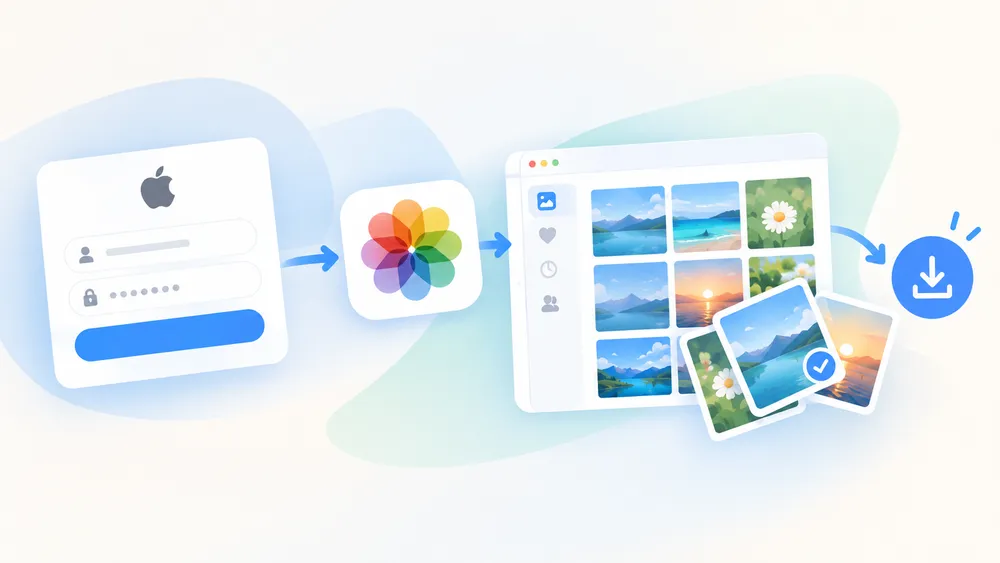
Step 1. Go to Google Drive website and log in with the same Google account used for Google Photos.
Step 2. Look for a folder called Google Photos or Google Fotos.
Step 3. If not visible, use search filters like filename:*.jpg or filename:*.png.
Step 4. Explore backup folders such as “Camera Uploads” or “Backup.”
Step 5. Select photos and click Download.
Our real-world cases: In one case, Andrés, an amateur photographer, thought he had lost over 1,200 travel photos from Peru. By searching Google Drive, we uncovered an old auto-synced folder and restored every single photo.
💡 Expert tip: Switch Drive to list view and sort by date—it makes locating older photos much faster in large accounts.
Another overlooked solution is checking other devices linked to Google Photos. In our tests, we found that deletions don’t always sync instantly. That means a photo erased on your phone might still exist on an older tablet, second phone, or backup device.
Steps to recover deleted photos from synced devices:
Step 1. Open an older device that had Google Photos installed.
Step 2. Turn off Wi-Fi/data before launching the app (to prevent sync).
Step 3. Browse the local gallery and albums.
Step 4. Save or export the photos before reconnecting to the internet.
Case example: A mother came to us after losing her baby’s first photos. Fortunately, we discovered them intact on her old Android tablet, where sync hadn’t yet updated.
Sometimes, the deletion isn’t user error—it’s a system glitch. In these situations, contacting Google Photos support can be surprisingly effective.
How to request help from Google Support:
Step 1. Go to support.google.com/photos.
Step 2. Log in with your Google account.
Step 3. Describe your issue in detail, including the date the photos went missing.
Step 4. Wait for a reply (usually 1–3 business days).
Our expert findings: We’ve seen multiple cases where Google admitted internal syncing issues and restored entire albums directly to the user’s account. It’s not guaranteed, but it’s worth the effort—especially for large, important photo collections.
During recovery projects, we often find that what users believe is “lost in Google Photos” actually exists in forgotten local backups. External hard drives, laptops, or third-party cloud services (Dropbox, OneDrive, iCloud Drive) are common lifesavers.
Steps to check local backups:
Step 1. Open your PC or external drive.
Step 2. Search folders like DCIM, GooglePhotos, or “Camera Uploads.”
Step 3. Use filters such as .jpg or .png to quickly locate images.
Step 4. Copy any recovered files to a safe location.
Case in point: One client believed all her baby’s photos were gone after losing Google access. After scanning her old laptop, we discovered a synced folder with hundreds of images she thought were deleted forever.
In our experience, shared albums are a hidden goldmine when trying to restore deleted Google Photos. If you shared an album with friends or family, the images may still exist—even after deletion in your own account.
Steps to recover deleted photos from shared albums:
Step 1. Open the Google Photos app.
Step 2. Tap the Shared tab.
Step 3. Browse albums you’ve shared or received.
Step 4. Download available images back to your gallery.
Example from our testing: Lucía once panicked after deleting her sister’s wedding photos. We reminded her of the private album she had shared. By simply retrieving the shared link, she restored all 200+ wedding images instantly.
💡 Expert tip: Can’t remember the link? Search Gmail for “You shared an album” or the event name—you’ll often find the original share notification.
Method | Success Rate | Time Required | Best For | Cost |
Google Photos Trash | 95% | 2 min | Deleted < 60 days | Free |
Gbyte Recovery (iOS) | 85-90% | 5-15 min | Permanently deleted, iPhone users | Free scan, paid recovery |
Google Drive | 60% | 5-10 min | Photos before July 2019 | Free |
Synced Devices | 50% | Varies | Multi-device users | Free |
Google Support | 30% | 1-3 days | System glitches | Free |
Local Backups | 70% | Varies | Users with backup habit | Free |
Shared Albums | 80% | 2 min | Photos you shared | Free |
After 30 days, or if the Trash is manually emptied, files are permanently deleted. You can still try Gbyte Recovery (for iOS) or search synced devices and backups.
Yes, if they were synced to Google Drive, iCloud, or found in shared albums. Gbyte Recovery can also scan old iCloud snapshots.
No. Shared albums and links often remain intact. Ask the recipient to resend them.
Yes, if you log in with the same Google account. If photos don’t appear, check old devices, backups, or use recovery software.
This could be a sync or cache error. Try logging out and back in, clearing app data, or checking the web version.
Yes. Even without backup, Gbyte Recovery can scan your iCloud snapshots to find deleted photos. Google Drive may also contain older photos synced before 2019.
Google Photos keeps deleted photos in Trash for 60 days. After that, they're permanently deleted. However, copies may still exist in Google Drive, shared albums, or iCloud backups.
"Delete from device" only removes the local copy. "Delete everywhere" removes from all synced devices and cloud. For recovery, the latter is harder but still possible with tools like Gbyte Recovery.
Based on hundreds of real-life recovery cases, our expert team can confirm: it is possible to recover deleted photos from Google Photos, but success depends on timing and the method chosen.
If it’s within 30 days, the Trash is your best bet.
For permanently deleted photos, check Google Drive, shared albums, or local backups.
On iPhone/iPad, tools like Gbyte Recovery provide the highest chance of success.
🔑 Final expert recommendation: Always enable automatic backups and export your most important images to local storage. The best recovery is the one you never need.

 Add Gbyte as a preferred source on Google
Share


Copyright @2026 Gbyte. All rights reserved.
The installation wizard will automatically start after downloading.
After registration, the recovery process can be managed through the web interface.
You get it all with your purchase - no locked features, no hidden limitations.